R&D Tax Credit Eligibility for Boat Manufacturers: What Qualifies and What Does Not
R&D tax credit eligibility for boat manufacturers comes down to what the work was trying to figure out. This guide covers what can qualify, what usually does not, and what to expect from a credit study.

TL;DR
- R&D tax credit eligibility for boat manufacturers depends on the work, not the size of the yard or whether anyone calls it research.
- Hull and structural design, material and layup trials, systems integration, and performance testing often qualify. Styling, routine production, and rebuilding a proven design generally do not.
- A credit study sorts your qualifying work from the rest, and the result is reported on Form 6765.
What the R&D tax credit is, and why boat manufacturers can qualify
The federal research credit (IRC Section 41) is a dollar-for-dollar reduction in tax for companies that develop or improve products and processes through qualifying technical work. It is often described as a manufacturing tax credit in practice, because manufacturers who design, prototype, and test are among its most frequent claimants. The Treasury regulations set out the tests, and the IRS overview of Form 6765 shows how the credit is reported.
Most boat company owners hear “research and development” and picture a lab. Their own week looks different: a deck layout that has to clear a bilge pump, a hull form that has to hit a speed and fuel target, a core and resin combination that has to survive a hard slam. The regulations look at what the work was trying to figure out and how you went about figuring it out, not what you call it.
R&D tax credit eligibility: the four-part test in boatyard terms
Work generally has to meet four ideas to qualify.
Permitted purpose. Was the work aimed at a new or improved function, performance, reliability, or quality? A hull that planes earlier, a hatch that seals better, or a layup that cuts weight without losing stiffness: yes. A new color scheme or trim package: no. The rules exclude style, taste, and cosmetic changes.
Technological in nature. Did the work rely on engineering or the physical sciences? Naval architecture, structural analysis, materials behavior, hydrodynamics, and electrical and mechanical systems design all fit.
Technical uncertainty. At the start, was it unclear whether the design could be built, how it should be built, or what the right design was? If your team already knew the answer and was simply executing, there is usually no uncertainty to resolve.
Process of experimentation. Did you evaluate alternatives to find out? Test panels, scaled or full prototypes, revised mold plugs, comparisons of cores or fastening schemes, and on-water trials are the kind of evaluation the rule describes. Success is not required.
What can qualify in a boat build, stage by stage
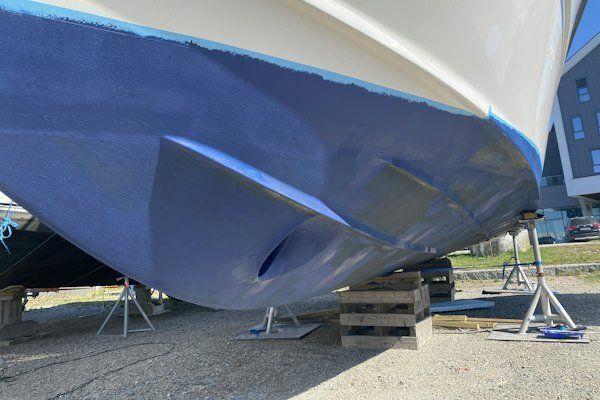
Hull and structural design. Developing a new hull form, reworking the stringer and bulkhead layout, or redesigning for a new weight or load target can qualify when the answer was not known going in. Building an existing hull again generally does not.
Materials and layup. Trying a different core, resin system, laminate schedule, or aluminum weld approach to hit a strength or weight goal, with test panels to compare, is a common source of qualifying activity. Following your established schedule on a repeat build is routine production.
Systems integration. Packaging propulsion, electrical, steering, fuel, and electronics into a tight or unusual hull often forces real design iteration. Routing your team has done the same way for years does not.
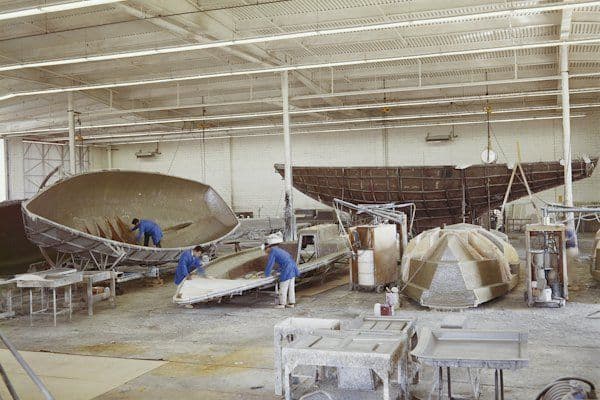
Prototype and mold work. Building a prototype, revising a plug, or reworking a mold after a failed pull can qualify. The mold or tooling itself is depreciable property and generally not a qualifying supply, though the labor and consumed materials of the trial work may qualify, depending on the facts.
Sea trials and testing. Trials run to find out whether a design meets its performance targets, and the fixes that follow, can qualify. Trials that confirm a proven design before delivery are closer to routine quality checks.
Where it stops. Activities after a component is ready for commercial sale or use, including tooling-up, trial production runs, and routine troubleshooting, are generally excluded.
What an R&D credit study looks like for a boat builder
An R&D credit study is the work of identifying your qualifying projects, tying wages and supplies to them, and documenting the result. The costs that commonly count are wages of people who do, directly supervise, or directly support the qualifying work, consumed supplies, and certain outside engineering costs. The study produces a documentation package that supports the figures reported on Form 6765, which your CPA files with your return. You keep a modest share of the effort, and most of the work sits with the provider.
Solace Boats, a marine builder, identified more than $300,000 in credits. Individual results vary, and every claim depends on the specific activities, documentation, and facts of the business.
Frequently asked questions
Do small boat builders qualify for the R&D tax credit?
Often, yes. Eligibility depends on the work, not the size of the yard. A ten-person custom builder reworking a hull for a new engine package may have more qualifying activity per project than a larger builder running proven models.
Does a failed prototype still count?
It can. Success is not required, and a scrapped mold trial or a failed test panel can still be qualifying activity, depending on the facts.
Does custom work for a customer qualify?
It may, but contract terms matter. Who bears the risk and who holds the rights to the results can affect whether the work counts as funded research.
How long does an R&D credit study take?
A typical turnaround is 4 to 8 weeks, depending on the business.
What does it cost to find out?
Strata offers a $0 initial assessment.
What to do next
If your yard has built a new model, reworked a hull, or tested materials in the past few years, some of that work may meet the test. Bring your R&D credit eligibility questions to Strata first. You receive a filing-ready documentation package to hand to your CPA, who files it with your return. Strata also offers different levels of service, so you can choose how much of the lift you carry yourself.
Start with a 15-minute review at stratataxgroup.com/contact.
This post is for informational purposes only and does not constitute tax or legal advice. Consult a qualified tax professional regarding your specific circumstances.
Author
Strata R&D Tax Group