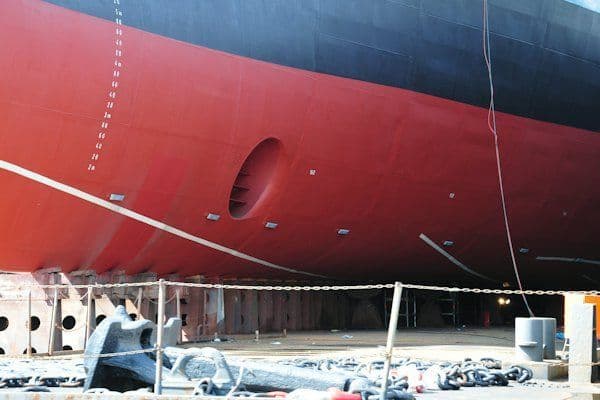
Your Boat-Builder Customers May Be Sitting on an R&D Tax Credit. Here's How to Bring It Up
Boat builders solve engineering problems every day that may qualify for the federal R&D credit. If you supply or distribute to them, you may be the right person to start that conversation.

TL;DR
- Boat builders who iterate on hull designs, lamination schedules, propulsion integration, or new materials may be performing qualified research under IRC Section 41, often without realizing it.
- If you supply or distribute to boat manufacturers, you see their engineering challenges up close, which can make you the natural person to mention the credit. You raise the question; a specialist answers it.
- Strata offers a $0 initial assessment, and a typical study often takes 4 to 8 weeks depending on the facts.
You walk your customers' shop floors. You see the test hulls, the scrapped molds, the third revision of a stringer layout that still isn't stiff enough. Have you ever considered that the problem-solving you're watching may be worth a federal tax credit to that builder?
Many boat manufacturers assume the R&D tax credit belongs to software companies and pharmaceutical labs. In practice, the credit was designed for exactly the kind of hands-on engineering experimentation that happens in boat shops. If you supply materials, components, or equipment to builders, understanding the basics can make you a more valuable partner.
What the federal R&D credit actually covers
The federal credit for increasing research activities lives in IRC Section 41, with the details of what counts as qualified research spelled out in Treasury Regulation 1.41-4. The IRS also maintains an overview of the credit and its filing mechanics on its Research Credit page.
To qualify, an activity generally has to pass a four-part test:
- Technological in nature. The work relies on principles of engineering, physical science, or computer science. Naval architecture, composites engineering, and hydrodynamics can all fit here.
- Permitted purpose. The activity aims to create or improve a product or process in terms of function, performance, reliability, or quality.
- Technical uncertainty. At the outset, the builder didn't know whether they could achieve the result, or how, or what the right design was.
- Process of experimentation. The team evaluated alternatives through modeling, prototyping, or systematic trial and error.
Whether a specific project qualifies depends on the activities, documentation, and facts involved, which is why a careful study matters.
What qualifying work can look like in a boat shop
Activities that may qualify, depending on the facts:
- Developing or modifying hull designs to improve performance, stability, or fuel efficiency, including tank testing and CFD modeling
- Experimenting with lamination schedules, resin infusion processes, or new core materials to reduce weight without sacrificing strength
- Designing and iterating plugs, molds, and tooling for new models
- Integrating new propulsion systems, including electric or hybrid drivetrains, where the installation raises real engineering questions
- Engineering electrical, steering, or fuel systems for a new platform
- Prototype builds and sea trials conducted to evaluate design alternatives
Work that typically does NOT qualify:
- Routine production runs of an established model
- Cosmetic or styling changes with no functional engineering uncertainty
- Warranty repairs and routine maintenance
- Market research, sales, and administrative activities
- Research funded by another party where the builder doesn't retain rights or bear the economic risk
- Duplicating an existing design without technical uncertainty
An honest assessment separates the two. Overclaiming is how builders get into trouble; underclaiming is how they leave money on the table.
Why this can be your conversation
As a supplier or distributor, you occupy a position their tax preparer usually doesn't: you see the experimentation happening. When a customer orders extra resin for infusion trials or asks about a new core material's shear properties, you're watching potentially qualifying activity in real time.
How to raise it without overstepping:
- Keep it to one question: "Have you ever looked at the federal R&D credit for the development work you do?" You're not giving tax advice; you're pointing at a door.
- Offer the introduction, not the answer. Connect them with a specialist and step back. Eligibility questions belong with people who do this every day.
- Be upfront about the relationship. If you have a referral arrangement, say so plainly. The referral fee comes from Strata, not the client's pocket.
- Don't promise outcomes. No one can guarantee a credit amount before a study is done, and you shouldn't either.
Done this way, the conversation strengthens the customer relationship. You brought them something of potential value and let the experts take it from there.
What results can look like
Solace Boats, a performance boat manufacturer, identified over $300K in R&D tax credits through this process. Individual results vary based on each company's specific activities, expenditures, and documentation.
Strata's initial assessment costs $0, and a typical engagement often runs 4 to 8 weeks from kickoff to deliverable, depending on the complexity of the work and the state of the records.
FAQ
My customer's CPA already does their taxes. Doesn't the CPA handle this?
Often the CPA prepares the return while a specialist prepares the R&D study that supports it. The two roles are complementary. Specialists focus narrowly on Section 41 documentation standards and work alongside the company's existing tax preparer.
Does the builder need a formal lab or engineering department?
No. Qualified research can happen on the shop floor. What matters is the nature of the activity under the four-part test, not the job titles of the people doing it, though contemporaneous documentation helps substantiate the claim.
Can smaller builders benefit, or is this only for large manufacturers?
Companies of many sizes may benefit. Eligible startups may even be able to apply the credit against payroll taxes in some circumstances. The IRS outlines the claim mechanics in the instructions for Form 6765.
What if the builder looked into this years ago and passed?
Rules and interpretations evolve, and so do a builder's activities. A company that didn't qualify, or didn't bother, three years ago may be in a different position today. Amended returns can also capture certain prior years, depending on the facts.
Ready to introduce a customer, or curious whether your own operation qualifies? Contact Strata for a $0 initial assessment.
This post is for informational purposes only and does not constitute tax or legal advice. Consult a qualified tax professional regarding your specific circumstances.
Author
Strata R&D Tax Group