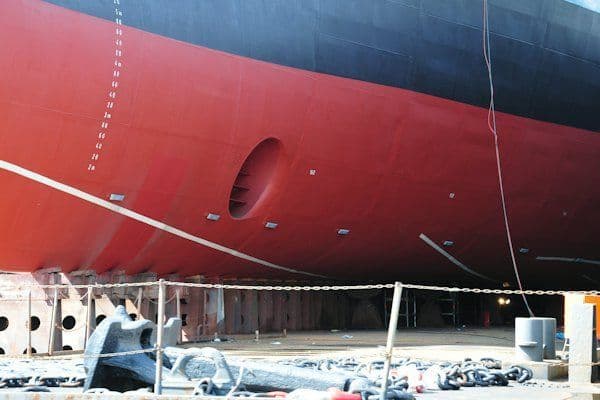
R&D Tax Credits for Boat Builders: When Hull and Rigging Work May Qualify
New hull geometry, composite layups, propulsion integration, and rigging problem-solving can look a lot like R&D under IRC Section 41. Here is how boat manufacturers can tell what may qualify.

TL;DR
- Boat builders often perform qualifying R&D without calling it that: new hull geometry, composite layup development, propulsion and systems integration, and rigging or running-gear problem-solving can all fit the federal test.
- The federal R&D credit under IRC Section 41 turns on a four-part test, not on whether you run a formal lab. Design iteration and on-the-water testing frequently count; routine production and cosmetic changes usually do not.
- A no-cost eligibility assessment can help you see whether your build and prototyping work may qualify before you commit to anything.
The work you call "figuring it out" may have a tax name
Ask most boat builders whether they do research and development and the answer is usually no. Ask whether they have ever redesigned a hull to fix a handling problem, dialed in a new composite layup to cut weight without losing stiffness, or spent a week getting a repowered drivetrain to run clean, and the answer is usually yes. That second category is where the federal R&D tax credit often lives.
The credit is not reserved for pharmaceutical labs or software companies. It was written to reward businesses that work through technical problems by designing, building, and testing. A lot of what happens on a boat shop floor can fit that description, depending on the specific activities, documentation, and facts.
What the federal R&D credit actually covers
The credit comes from Section 41 of the Internal Revenue Code, with the qualifying-activity rules spelled out in Treasury Regulation 1.41-4. To count, an activity generally has to pass a four-part test:
First, it has to be technological in nature, meaning it relies on principles of engineering, physics, chemistry, or a similar hard science. Hydrodynamics, structural loads, and materials behavior all qualify as technological in this sense.
Second, it has to have a permitted purpose: you are trying to create or improve a product or process so it performs better, is more reliable, or is more efficient. A faster, drier, or more fuel-efficient hull is a classic permitted purpose.
Third, there has to be technical uncertainty at the outset. If you did not know at the start whether a design would work, or how you would achieve it, that uncertainty is a good sign.
Fourth, you have to work through that uncertainty with a process of experimentation: evaluating alternatives, modeling or prototyping, and testing. On the water, in the tank, or on the bench all count.
You do not need every project to look like formal research. The test looks at the activity, not the job title of the person doing it.
What qualifying activity can look like in a boat shop
In marine and boat manufacturing, qualifying work often shows up in places builders think of as just part of the job. Developing a new hull form or modifying an existing one to change planing behavior, ride, or stability can involve real technical uncertainty and iteration. So can composite and materials work: testing a new resin system, changing a laminate schedule, or moving from hand layup to infusion to hit a weight or strength target.
Systems integration is another common source. Fitting new propulsion, hybrid or electric drive components, steering, or complex electrical and control systems into a hull often means solving problems that have no off-the-shelf answer. Designing custom running gear, brackets, or mounting solutions to handle load or vibration can qualify. So can the prototyping and sea-trial cycle: building a hull, testing it, finding a problem, and reworking the design is close to the textbook definition of a process of experimentation.
Just as important is the honest other side of the ledger. Plenty of good work in a boat shop typically does not qualify. Building the same production model to an established design, without solving new technical problems, generally does not count. Cosmetic or purely aesthetic choices, such as gelcoat color or upholstery styling, usually fall outside the credit. Routine assembly, standard repairs and warranty work, and installing components exactly to the manufacturer's spec without any development are normally excluded. Marketing, sales, and general administrative time do not qualify either. Drawing this line carefully is part of what keeps a claim defensible.
If you own or run the shop, here is what to do next
For a boat manufacturer, the practical question is not whether R&D "sounds like you," it is whether your build and prototyping activity may meet the four-part test in a given year. That is a facts-and-documentation question, and it is worth answering before you leave potential credits unclaimed or, on the other end, claim activity that will not hold up.
A good starting point is a no-cost, no-obligation eligibility assessment. Strata reviews the kind of work your team actually does, points to where qualifying activity may exist, and is honest about where it does not. A typical engagement often runs in the range of four to eight weeks depending on the complexity of your projects and how your records are kept. There is no fee to find out whether it may be worth pursuing.
To make that conversation productive, it helps to think about the last year or two of builds: any new or modified hulls, any materials or layup changes, any repower or systems projects that took real trial and error, and how that work was documented in drawings, test notes, or change logs.
One illustration of the scale involved: Strata identified more than $300,000 in R&D credits for Solace Boats, a builder whose day-to-day work included exactly this kind of hull and systems development. Individual results vary based on each company's activities, spending, and documentation, so this is an example rather than a promise. It is a useful reminder, though, that credits at this level are not unusual for builders doing genuine development work.
FAQ
We build production boats, not one-offs. Can we still qualify?
Possibly. The credit follows the activity, not the business model. If some of your production models started as designs you had to develop and test, or if you improve models over time by solving technical problems, that development work may qualify even though the final product is built in a series. Routine repeat production of a settled design generally does not.
Do sea trials and on-the-water testing count?
They can. Testing to evaluate whether a design meets performance, handling, or reliability targets is often part of a qualifying process of experimentation, particularly when the results feed back into design changes. Whether a specific trial qualifies depends on its purpose and how it is documented.
What records will we need?
Documentation matters. Helpful records can include design drawings and revisions, prototype and tooling notes, test and sea-trial results, engineering emails, and payroll information tied to the people doing the work. You do not need a perfect paper trail to start a conversation, but stronger documentation generally supports a stronger, more defensible claim.
How do we know if it is worth the effort?
That is what the initial assessment is for. There is no cost to have Strata look at your activities and give you an honest read on whether a credit may be available and roughly what scale it might be, before you decide whether to move forward. You can start that conversation at stratataxgroup.com/contact.
This post is for informational purposes only and does not constitute tax or legal advice. Consult a qualified tax professional regarding your specific circumstances.
Sources:
Author
Strata R&D Tax Group